
Smash Hit
MediocreArcade
4.5169.65K Reviews
- Version
- 1.5.14
- Installs
- 100.00M
- Age Rating
- Everyone
Screenshots
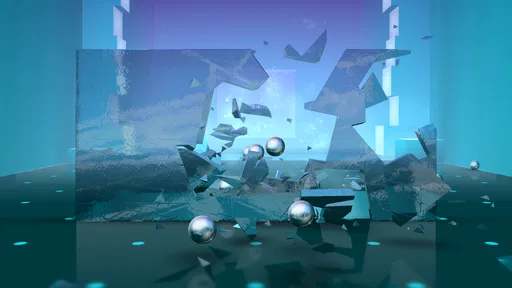
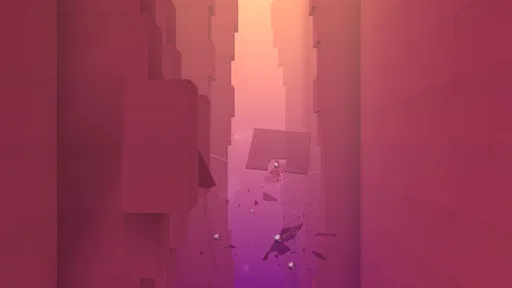
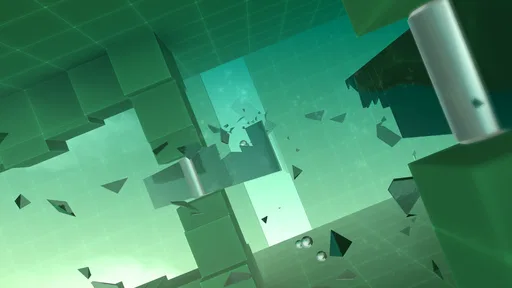
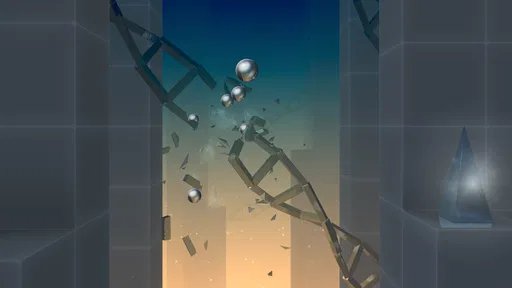
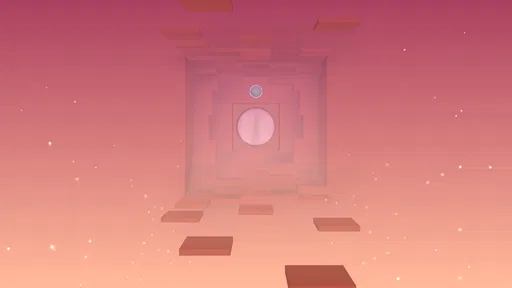
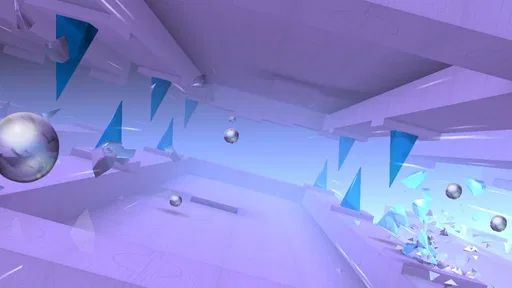
Our Review of Smash Hit
 Analysis by Appyee
I usually reach for a game like Smash Hit when I have a short pause and want something more absorbing than a quick puzzle, but not a story that demands a long commitment. Its central action is easy to grasp: aim at glass obstacles and throw metal balls to break them as you move through a shifting corridor. The appeal is not just the crash at the end of a throw; it is the small decision beforehand—whether to act now, wait for a clearer line, or save a ball for what is coming.
That makes the game a better fit for people who enjoy timing and careful aim than for anyone looking for a broad collection of activities. I find it satisfying when a run goes well, yet the same focus can make a mistake feel costly. Each attempt asks me to balance speed against accuracy, and that tension is what makes another try tempting.
The Hypnotic Journey Begins
From the moment you launch Smash Hit, you're greeted with a futuristic, almost ethereal world of glass and light. The objective? Simple. You smash your way through various levels by throwing metal balls at glass obstacles. Sounds straightforward, right? But trust me, it’s more challenging than it seems.
The game is all about timing and precision. As you progress, the pace picks up and the obstacles become more intricate. The beauty of Smash Hit lies in its seamless blend of visuals and sound. The breaking glass sound is incredibly satisfying and the ambient music keeps you in the zone. It’s like a stress ball for your brain!
Gameplay Mechanics That Hook You In
The mechanics are as smooth as butter. You tap to throw balls, and that’s pretty much it. However, the challenge lies in conserving your balls. Run out of them, and it’s game over. You collect more by smashing through crystal pyramids, adding a layer of strategy to the madness. It’s all about precision and efficiency. The further you get, the more points you rack up, and let me tell you, seeing those high scores climb is a dopamine rush.
One feature I really appreciate is the checkpoint system. You reach a checkpoint every so often, and it gives you a chance to catch your breath and recalibrate. However, continuing from a checkpoint comes at the cost of a few balls, so spend them wisely!
That checkpoint cost changes how I approach a run. It is tempting to treat a checkpoint as a safety net, but it is better to see it as a way to resume with fewer resources rather than a free restart. When I am trying to improve, I pay attention to where I spent balls carelessly before deciding whether to continue. A checkpoint can preserve momentum, but it cannot undo wasteful throws.
A practical habit is to avoid tapping repeatedly just because an obstacle looks breakable. A shot that misses does not help, and a fast sequence of uncertain taps can drain the supply before the next useful target appears. I get better results by making each throw deliberate, especially when the corridor is busy. This is a small change, but it turns the game from frantic tapping into a more readable rhythm.
A Feast for the Eyes
Visually, the game is a masterpiece. The developers have done a fantastic job of creating a world that’s both simple and captivating. The graphics are clean and the transitions between levels are smooth. Each stage has its own theme, ranging from tranquil blue corridors to vibrant, chaotic reds and oranges. The game manages to keep things fresh and exciting without overwhelming you.
The changing colors do more than make a run look attractive: they also help mark the mood and pace of a stretch. I find that the quieter-looking passages invite a steadier aim, while brighter, busier scenes can make me rush. That is not a rule the game explains; it is simply a useful reminder to watch my own reaction. If I start firing too quickly because the screen feels intense, pausing for a moment can be more valuable than trying to match the visual energy.
The Soundtrack of Destruction
I can’t talk about Smash Hit without mentioning the soundtrack. It’s a perfect companion to the gameplay, with ambient tunes that ebb and flow with your progress. The sound of shattering glass is incredibly realistic and adds a whole new layer of immersion. Every smash feels impactful, making each level a sensory delight.
The audio is part of the feedback loop: a well-placed hit gives a crisp response, and a missed opportunity is harder to ignore when the action is otherwise so calm. I like that contrast because it makes successful throws feel earned without adding a lot of on-screen explanation. It also means this is not always my first choice in a setting where I need to keep my phone quiet or pay close attention to people around me. The visual action remains clear, but the full effect is strongest when I can hear it.
Replayability and Challenges
What keeps me coming back to the game is its replayability. Even after you’ve played through the levels once, you’ll find yourself wanting to do it all over again to beat your previous score. The game also includes a few different modes to spice things up. Endless mode, for example, is a relentless test of your skills and reflexes.
In addition, there are several achievements to unlock, which adds an element of challenge and keeps things interesting. Whether you’re a casual gamer or a hardcore enthusiast, there’s something here for everyone.
For me, the most useful reason to replay is not simply to chase a higher number. A new attempt lets me test one adjustment at a time: taking more care with a difficult target, conserving shots, or staying composed when the pace rises. That makes a short run feel like practice rather than a repeat of the same route. If I keep making the same mistake, though, replaying without changing my approach quickly becomes frustrating.
This is also where the game differs from many arcade alternatives. Some mobile arcade games reward constant movement, rapid tapping, or collecting a stream of power-ups. Here, the central pleasure is a clean shot and the resource decision behind it. If you want a score chase that you can play while barely looking at the screen, a simpler reflex game may suit you better. If you like improving through observation and restraint, this one offers more to think about than its one-touch control suggests.
Where It Fits in a Busy Day
I can imagine playing a run while waiting for a coffee or sitting through a short stretch of travel, because the basic action is easy to return to without needing to remember a complicated plot. It also works as a deliberate break between longer tasks: I can focus on the moving targets for a few minutes, then stop when the run ends. The catch is that “one more try” is persuasive, particularly when I feel I was close to a better result. If I have a firm deadline, I would not open it expecting to play for only a moment.
For a first session, I would focus on learning how quickly targets approach and how much precision each throw needs, rather than trying to maximize a score immediately. Notice which objects are worth aiming at and which shots feel like guesses. Once that becomes familiar, replaying with a specific goal—such as wasting fewer balls—gives the game a clearer purpose. This approach is more helpful than tapping at every visible object and hoping accuracy improves on its own.
The minimal control scheme also makes it approachable for someone who does not normally play action games. There is no elaborate button layout to memorize; the challenge is reading the scene and choosing when to throw. But simple controls do not mean the game is effortless. Players who dislike losing progress after a limited resource runs out may prefer a more forgiving arcade game, while people who enjoy learning from failed attempts are more likely to appreciate the pressure.
Cost, Access, and Who Should Try It
The game is free to download, with in-app purchases listed from $1.99 to $9.99 per item. It is rated for Everyone, and the age guidance makes it an option to consider for a broad audience, though a parent should still decide what is suitable for their own child. It was released on March 5, 2014, and Mediocre remains the developer behind it. The current version is 1.5.14, with Android 8.0 as the minimum operating-system requirement.
Its long-standing reach is striking: the average rating is 4.5 from around 4.7 million ratings, and it has over 100 million installs. Those figures suggest that the simple premise has connected with a large audience, but they cannot tell you whether its pace suits your taste. I would recommend trying it if you enjoy visual polish, precise touch play, and replaying a run to improve. I would steer away if you want a deep narrative, a wide variety of mechanics, or a game that never penalizes a missed shot.
If you are wondering whether it is suitable for brief play, I think it is—provided you are comfortable ending a run and starting over rather than expecting each visit to feel like a complete, self-contained level. If you want a longer challenge, the score chase and alternative modes give you a reason to stay. The trade-off is that the core action remains focused on aiming, throwing, and preserving your supply; it does not turn into a different kind of game just because you play longer.
Wrapping It Up
Overall, this is a game that’s easy to pick up but hard to put down. Its combination of striking visuals, satisfying glass-breaking feedback, and carefully judged resource use makes it an appealing choice for a focused mobile session. Whether you’re looking to fill a pause or work on a better run, it has a clear reason to keep playing. For me, its strongest quality is that a tiny action—a tap to throw—can feel meaningful when I have to decide whether the shot is worth spending.
If you haven’t tried it yet, give it a go if that balance of calm presentation and demanding aim sounds appealing. I would start with a relaxed run, learn how the targets behave, then return with one improvement in mind instead of chasing a perfect attempt straight away. The game is most rewarding when each restart teaches you something; if you prefer variety over repetition, another arcade option may be a better match.
Verdict
Strengths of Smash Hit
- Visually stunning graphics and design.
- Addictive gameplay with increasing challenge.
- Seamless transitions between levels.
- Immersive sound effects enhance experience.
- Smooth and responsive control mechanics.
Limitations of Smash Hit
- Can become repetitive over time.
- Requires in-app purchases for full features.
- Limited storyline or narrative depth.
- High battery consumption during play.
- No multiplayer or social features.
Other Releases by Mediocre
View All
Does not Commute
Racing3.9
Similar Picks in This Category
View All
Subway Surfers
SYBO Games4.6

Stickman Party 234 MiniGames
PlayMax Game Studio4.6

Subway Princess Runner
Ivy4.4

Temple Run
Imangi Studios4.2

Zombie Tsunami
Mobigame SAS4.6

Stack Ball - Crash Platforms
CASUAL AZUR GAMES4.5
Frequently Asked Questions
What is the main objective of Smash Hit?
In Smash Hit, the primary objective is to travel through various surreal environments, smashing glass obstacles with metal balls. The game emphasizes timing and precision as you aim and throw balls to clear your path, all while enjoying a rhythmic and immersive soundtrack. Progress is determined by how far you can travel before running out of balls.
Is Smash Hit free to play, or does it require in-app purchases?
Smash Hit is free to download and play on both Android and iOS platforms. However, it offers optional in-app purchases. These purchases can enhance the gameplay experience, such as providing a premium upgrade that allows for saving progress and accessing multiple game modes. The core gameplay is accessible without purchases.
What are the graphics and sound design like in Smash Hit?
Smash Hit features stunning 3D graphics with a minimalist design that creates a mesmerizing and immersive visual experience. The sound design is equally impressive, with ambient music and realistic sound effects that synchronize with the gameplay, enhancing the overall experience and adding to the game's unique atmosphere.
How does the difficulty level progress in Smash Hit?
As you advance in Smash Hit, the difficulty gradually increases. The game introduces more complex obstacles, faster-paced environments, and requires more precise aiming. This progressive challenge keeps players engaged and encourages improvement in skill and strategy as they aim to achieve higher scores and travel further distances.
Can Smash Hit be played offline, or does it require an internet connection?
Smash Hit can be played offline, making it a great option for those looking for entertainment without the need for a constant internet connection. This feature is particularly beneficial for players who want to enjoy the game during travel or in areas with limited connectivity.
Play our best games!


